
Ringing in the New Year with the following health regimen updates in terms of diet:
Supplements
I avoided supplements for over half a year, desiring a simple whole foods diet that I thought would provide me with adequate vitamins and minerals – and it did, based on a recent comprehensive blood test. However, for reasons I mention below, I recently started a daily supplement routine: vitamin D3+K2 at breakfast, vitamin B12 at lunch, and magnesium at dinner.
Breakfast: D3+K2
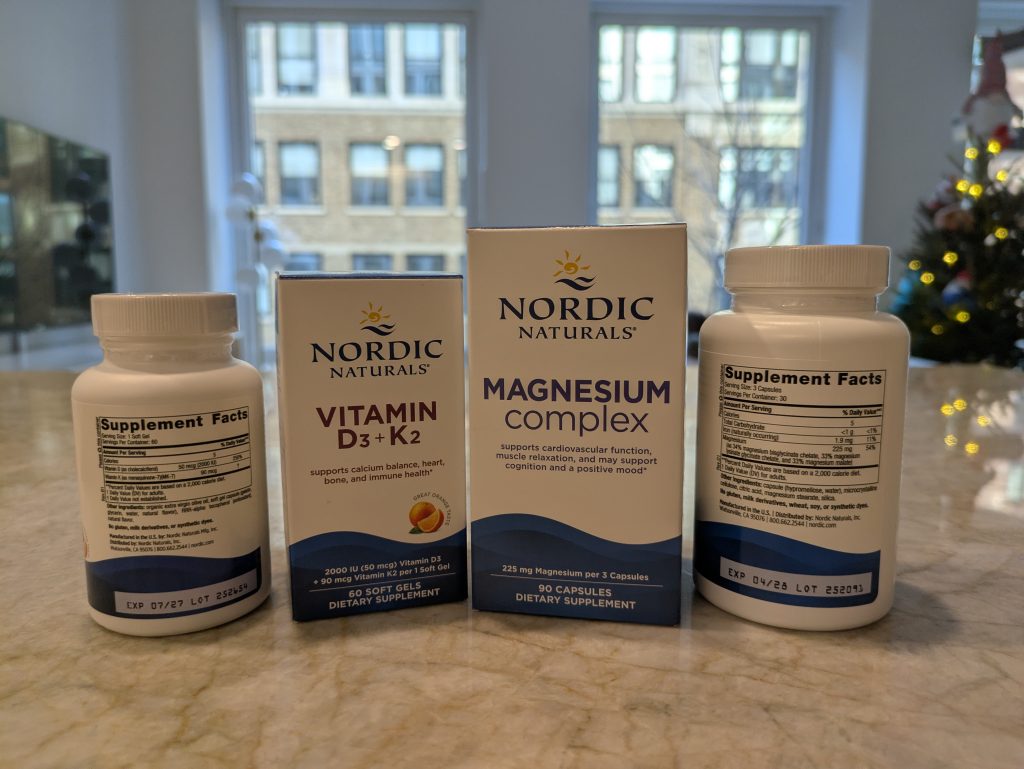
Supplementing D3 is more important during months of low sunlight (like the winter where I live) due to inadequate D synthesis from UV-B rays. D3 helps the body absorb calcium for strong bones and teeth (among other benefits). K2 in theory helps direct calcium into bones instead of blood vessels (helping prevent arterial calcification).
On my blood test, D3 was near the lower end of the normal range despite eating seafood high in D3 almost daily, as well as milk fortifed with D3. I knew it might only drop as the winter progressed.
I take Nordic Naturals D3+K2 softgels, 1 a day, which has 50 mcg (2000 IU) of D3 and 90 mcg of K2 as MK-7 (which is generally considered superior to the other widely available K2 option, MK-4, due to a longer half-life).
Buy Nordic Naturals Vitamin D3+K2 on iHerb.
Lunch: B12
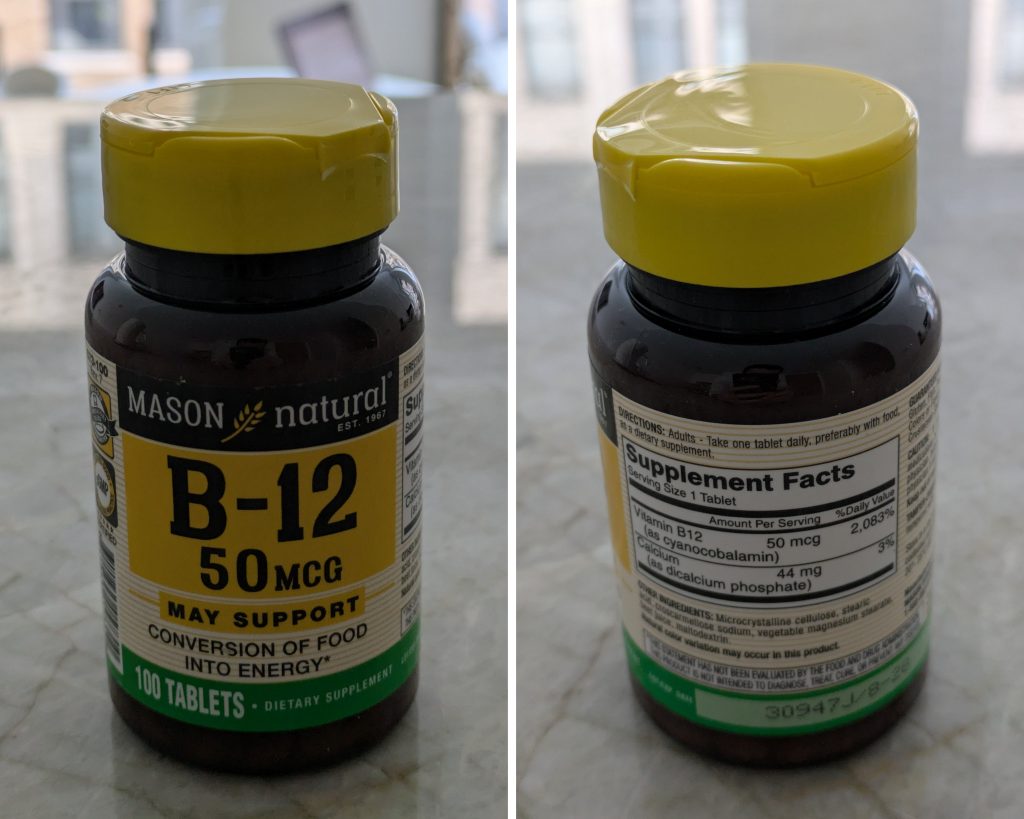
B12 – important for a variety of critical bodily functions including forming red blood cells and DNA, and maintaining healthy nerve, brain, heart and eye health – is pretty hard to come by in plant-based foods (the B12 in seaweed is a pseudo form which is not the same).
Although as a recent vegan-turned pescetarian I had been eating fish almost daily for six months, which resulted in a B12 level near the middle of the normal range, I took a break of at least a week to test for heavy metals (more on that below). During this time, I mostly replaced fish with hardboiled eggs, which by themselves, at 1-2 a day, don’t quite meet the RDA, so I added B12 to the mix.
I take Mason Natural, 1 tablet a day, which has 50 mcg of B12 in the form of cyanocobalamin (generally considered better absorbed than methylcobalamin), as well as 44 mg of calcium which helps with B12 absorption.
Buy Mason Natural B-12 on iHerb.
Dinner: Magnesium
Supplementing magnesium helps activate D into its usable form. Magnesium doesn’t need to be taken at the same time as D. Since magnesium can also increase the natural production of melatonin (which helps with regulating sleep cycles), it’s often recommended to take it nearer to bedtime, which is why I take it at dinner.
I take Nordic Naturals Magnesium Complex (pic above), 1 capsule a day although the serving size is 3, for convenience and since my magnesium blood level already tested near the higher end of the normal range before starting. 1 capsule provides 75 mg total magnesium of different forms.
Buy Nordic Naturals Magnesium Complex on iHerb.
“What I Eat” Video Series
Last month I uploaded a few videos on my YouTube channel showcasing options I have for breakfast, lunch, and dinner, all extremely easy and quick to prepare using widely available and healthy ingredients, mostly organic and unprocessed or minimally processed. Such meals (or similar variants) comprised what I ate most of the week for six months that resulted in all in-range vitamin and mineral levels (no deficiencies or excess) on a comprehensive blood test without the use of supplements (on other days, I ate out or was on holiday, where I still tried to stick with natural foods).
I’ve since made a few updates regarding a few ingredients in those recipes which I’ve shared as pinned comments in those videos and below.
Brown Rice, Seafood and Heavy Metals
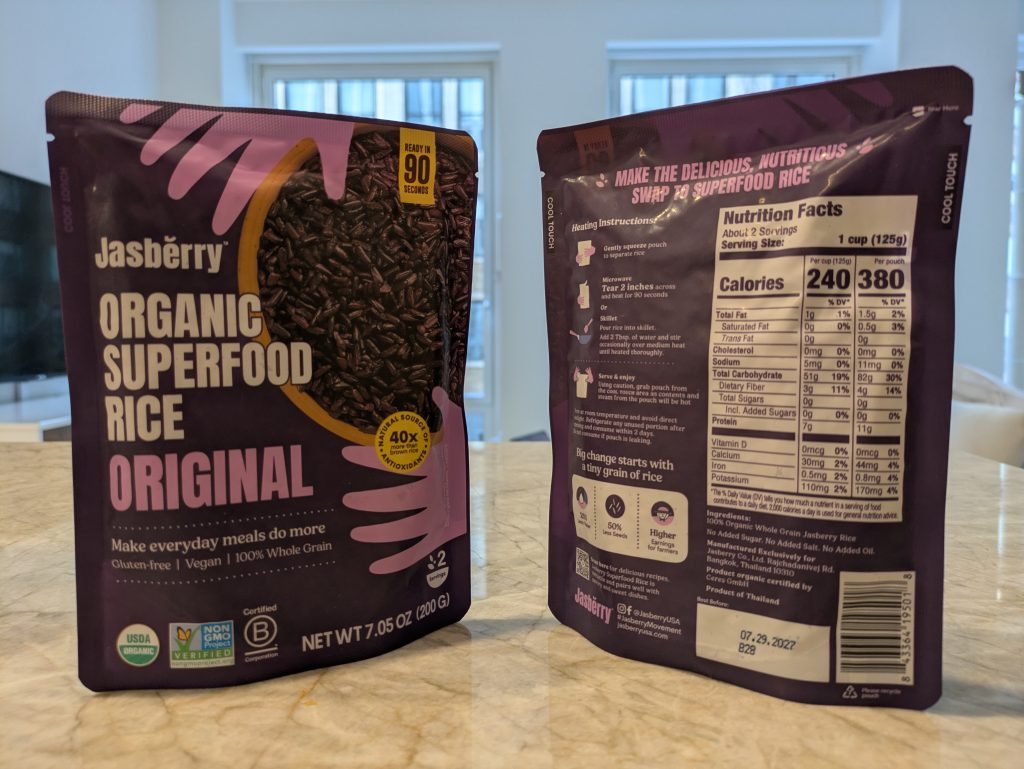
Brown rice grown in some areas, including certain states in the US, can have relatively high rates of arsenic, so I try to eat it no more than once weekly now. Another rice option I enjoy that is at least as healthy if not healthier than brown rice, without the same arsenic issue, is Jasberry organic superfood rice, which is also loaded with antioxidants.
Buy Jasberry Organic Superfood Rice on iHerb.
The arsenic found in seafood such as fish and most seaweed is mostly organic, which passes through the body relatively quickly and harmlessly, in comparison with the primarily inorganic arsenic that can be found in brown rice.
It’s good to get heavy metals levels in the body tested periodically if regularly eating foods that may be high in these. For tests it’s recommended to lay off seafood for at least 72 hours for a more accurate assessment of baseline mercury and inorganic arsenic.
High-Sat-Fat Yogurt
The yogurt I used in my original breakfast video (Harmless Harvest Organic Cultured Coconut Unsweetened Vanilla Bean) is high in saturated fat, at 20g/serving. Foods high in saturated fat may contribute to a rise in LDL (“bad” cholesterol). I would consume moderately or consider an alternative, depending on goals.
Organic Fortified Milk
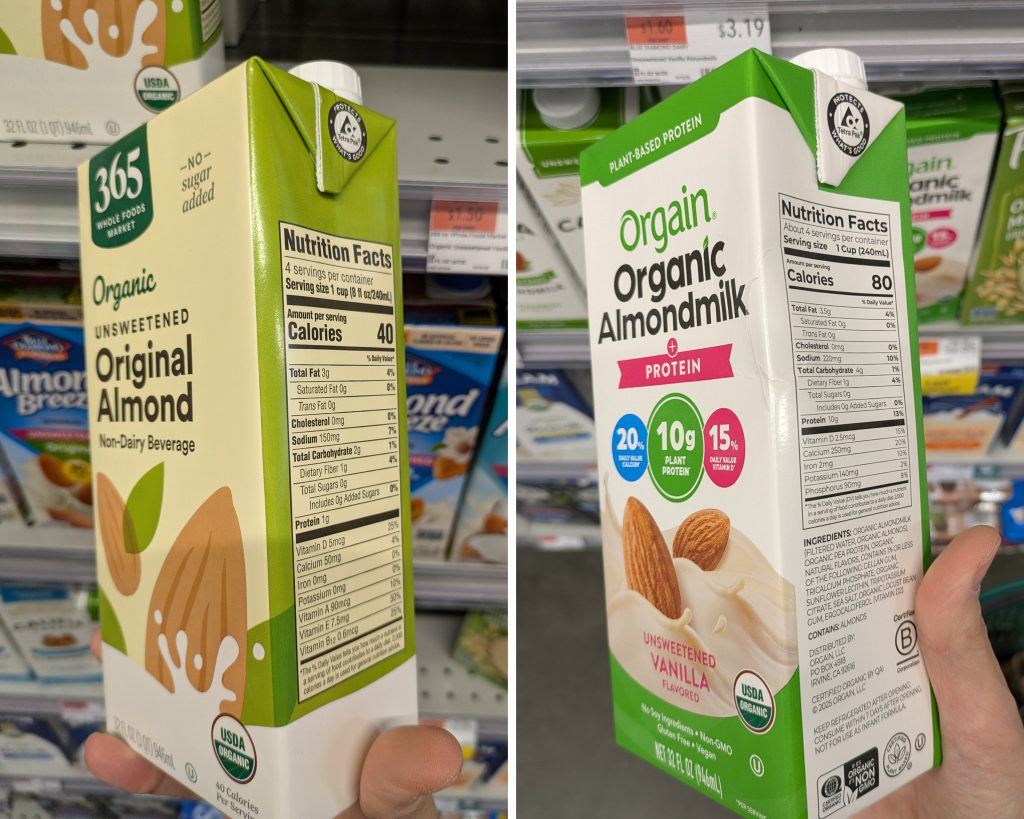
For plant-based milk I now prefer fortified certified-organic options such as the following: Whole Foods 365 Organic Unsweetened Original Almond, or Orgain Organic Almondmilk +Protein Unsweetened Vanilla. (The Califia almondmilk in my YouTube video is inorganic, and Califia organic almondmilk is currently unfortified.)
Buy Orgain Organic Almondmilk Unsweetened Vanilla on iHerb.
Misc updates
I reduced tuna consumption from up to every other day to no more than once a week to minimize mercury exposure. Tuna, especially certain varieties like the albacore/white I had often been eating, are high in mercury. I increased consumption of low-mercury options such as salmon, sardines and anchovies.
I dropped Brad’s kale products. Some brands of packaged kale chips may be high in thallium.
In addition to a sprinkling of mixed unseasoned raw nuts, I now add chestnuts to most savory meals, partly because I love the taste but it also has a great nutrition profile, loaded with vitamins, minerals, fiber and antioxidants. There are many bagged unshelled/peeled options.
As always I keep a list of what I typically currently eat at connorhawke.com/food.